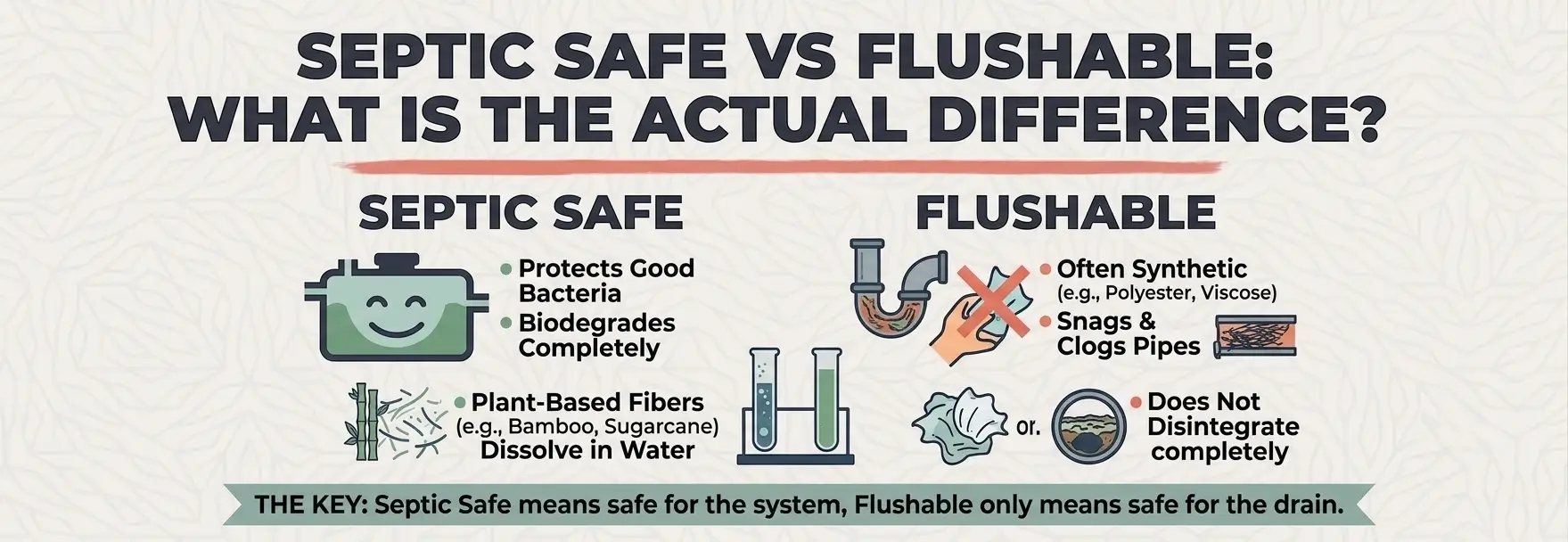
A product can be called flushable if it will pass through a toilet bowl and drain without immediately clogging the toilet or the drain pipe directly connected to it. That is essentially the extent of the standard. The product needs to clear the bowl and the first few feet of pipe. What happens after that is not part of the definition.
The toilet paper industry has developed more detailed flushability guidelines through organizations like INDA, the Association of the Nonwovens Fabrics Industry. Those guidelines include tests for dispersion in water and for what happens to the material as it moves through plumbing. But these are voluntary standards, not regulatory requirements. And even products that meet these voluntary standards may not be suitable for septic systems specifically.
The most visible consequence of the flushable misunderstanding is wet wipes. Hundreds of products labeled flushable wipes have been shown in independent testing to fail basic dispersion tests. They go down the toilet. They do not break apart. They move into sewer systems and septic tanks essentially intact.
In municipal systems, they combine with grease to form massive fatbergs that have blocked major sewer mains in cities around the world. In residential septic systems, they accumulate in holding tanks and eventually pass into drain fields. Several major cities have sued wipe manufacturers over sewer damage costs.
None of this means that toilet paper labeled flushable is necessarily dangerous. But it illustrates that the flushable label has no strong legal teeth. Products can carry it without meeting a meaningful performance standard for septic systems.